Mitr Phol Group Sustainability

Edit Template

Key Stakeholders: Shareholders, Farmers, Employees, Suppliers, Customers and Consumers, Communities,
Government and Civil Society Sectors

Climate change presents significant challenges to business operations, affecting the availability and quality of agricultural raw materials, water and energy consumption, operating costs, and supply chain continuity. The increasing frequency and severity of climate-related events, together with evolving regulations and changing market expectations, further reinforce the need for the Company to strengthen its resilience and preparedness in addressing these challenges.

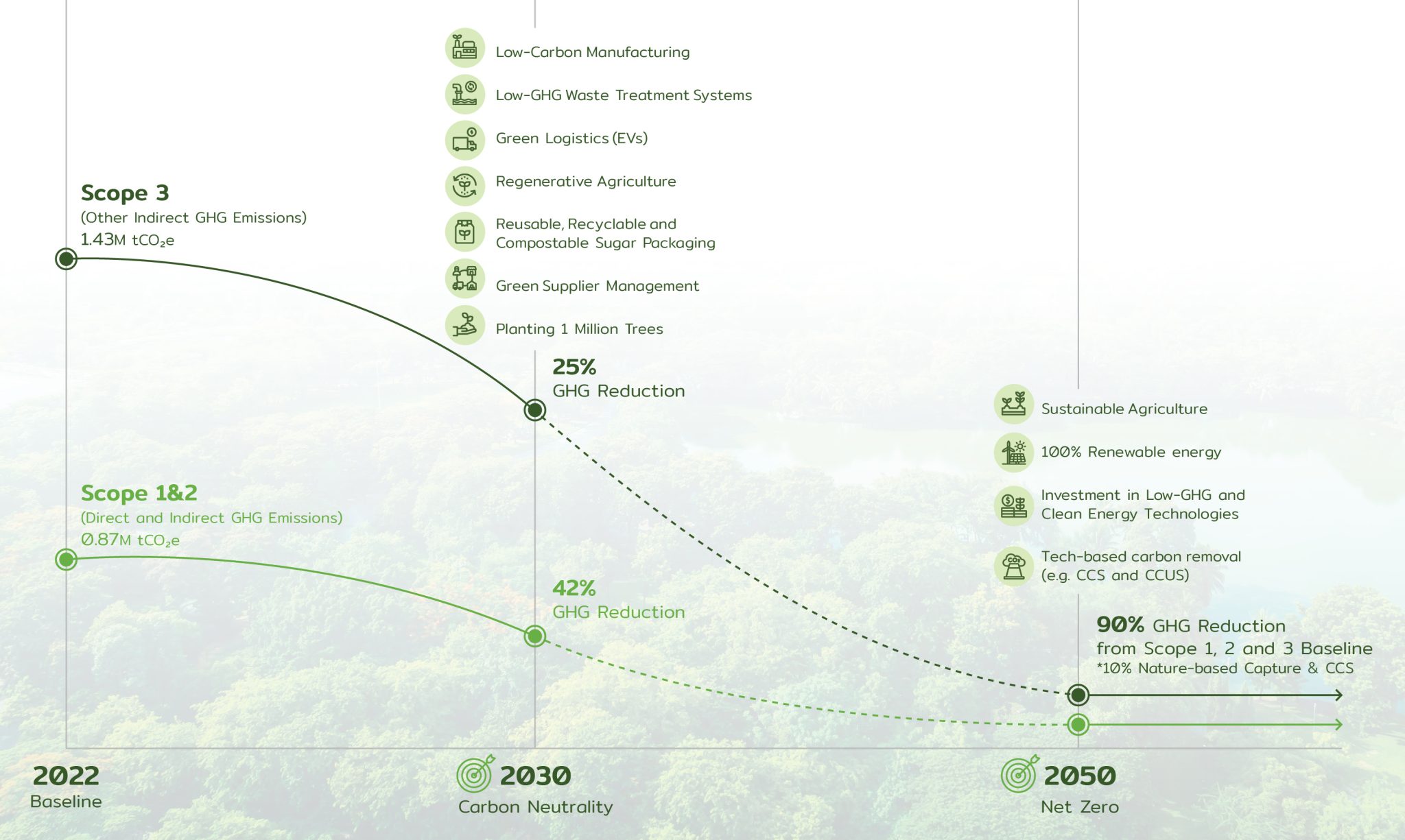
Mitr Phol has conducted its Carbon Footprint for Organization (CFO) assessment continuously since 2015, providing a robust foundation for the development of greenhouse gas reduction strategies, targets, and decarbonization plans. The Company has set targets to achieve Carbon Neutrality by 2030 and Net Zero greenhouse gas emissions by 2050.

To support these targets, Mitr Phol focuses on developing products and improving operational processes that contribute to greenhouse gas emissions reduction across the supply chain. The Company also promotes the adoption of environmentally friendly technologies and strengthens employee awareness and engagement to support its decarbonization efforts and enhance long-term climate resilience.

Net Zero Pathway

Management Approach

From Carbon Footprint for Organization (CFO) Inventory
to Platform Development

Mitr Phol’s organizational greenhouse gas (GHG) emissions inventory, or Carbon Footprint for Organization (CFO), is prepared using emissions data collected from business units responsible for relevant activities across the Group. Given the broad range of activities and diverse business operations involved, the process requires the collection, consolidation, and verification of a large volume of data, which can be both time-consuming and resource-intensive. In addition, ensuring the accuracy and consistency of data processing and analysis presents ongoing challenges.

To enhance data management and support effective GHG emissions reduction planning, the Corporate Sustainability and Digital Transformation teams have collaborated to apply digital technologies to the collection and reporting of organizational GHG emissions data. This initiative is designed to improve data accessibility, usability, and reliability, while ensuring alignment with the requirements of the Thailand Greenhouse Gas Management Organization (TGO) and the Greenhouse Gas Protocol. 

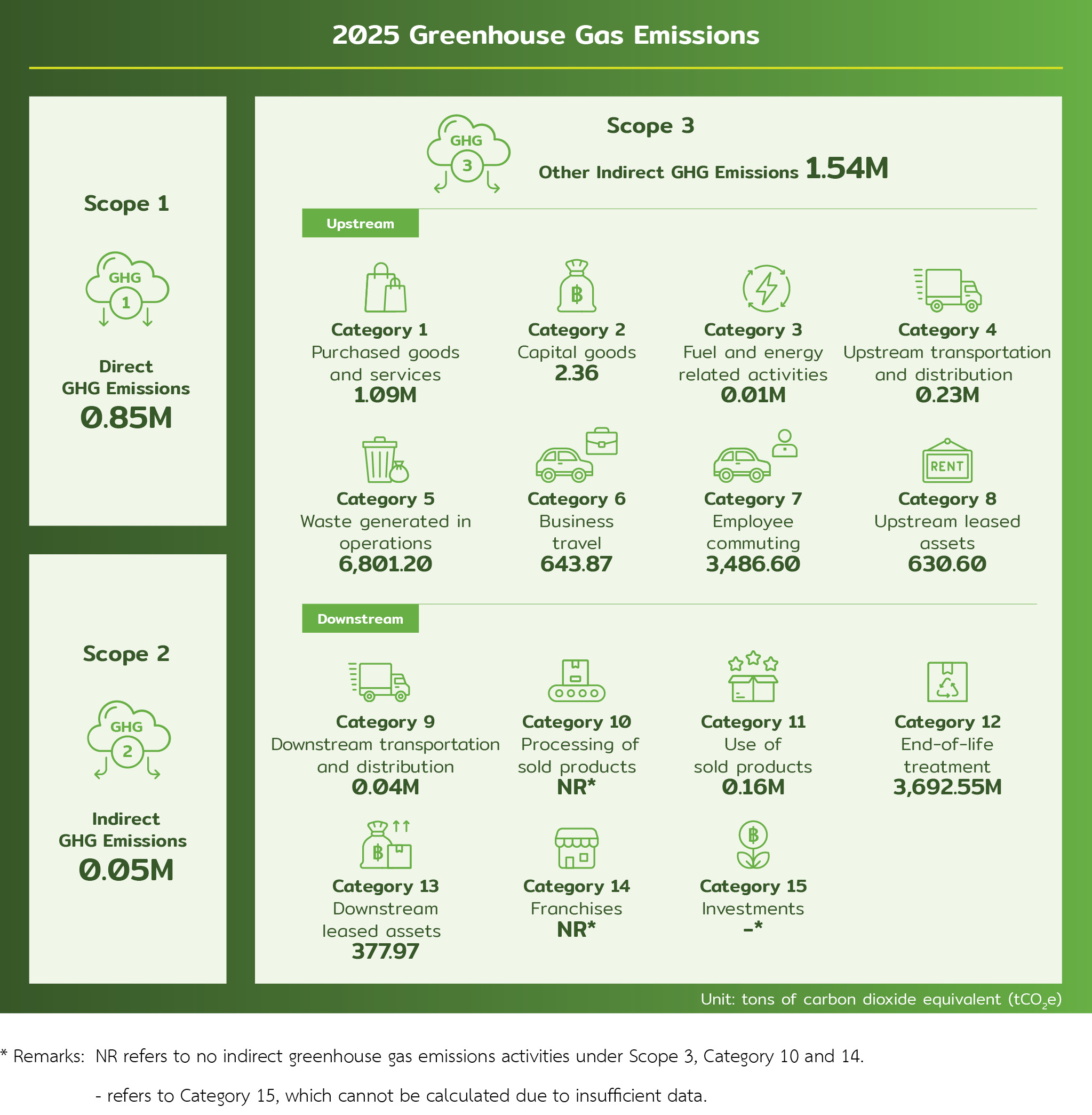
The Company is currently exploring the development of an integrated platform for GHG emissions data collection and assessment to support long-term climate management. The platform is expected to enhance the efficiency, speed, and accuracy of data management, while strengthening the Company’s ability to achieve its Carbon Neutrality target by 2030 and Net Zero greenhouse gas emissions target by 2050. Details of the Company’s GHG emissions in 2025 are presented below.

Climate-Related Risk Assessment

To support climate-related financial disclosures, the Company assesses physical risks, transition risks, and climate-related opportunities across its operations and supply chain. Climate scenario analysis is applied to evaluate the potential impacts of climate change on the business under a range of future scenarios. The assessment results are integrated into investment decision-making, strategic planning, and the development of short- and long-term climate adaptation measures. They also support the Company’s efforts to strengthen business resilience and effectively manage climate-related risks and opportunities. The Company discloses climate-related information in accordance with relevant sustainability disclosure standards and frameworks.

The assessment results are integrated into investment decision-making, strategic planning, and the development of short- and long-term climate adaptation measures. The Company discloses climate-related information in accordance with applicable sustainability disclosure standards and frameworks.

For more information, please visit TCFD – IFRS S2 Report

Social Impact Assessment and Actions for the Net-Zero Transition

The Company has developed a strategic climate transition plan to achieve its net-zero greenhouse gas emissions target. At the same time, the Company has assessed potential social impacts and engaged stakeholders across the value chain to support the effective implementation of its transition plans and actions. In 2025, the Company undertook the following key actions:
  • Building Knowledge and Understanding of Organizational Carbon Footprint Assessment and Reduction To strengthen the Company’s capability to meet its greenhouse gas emissions reduction targets, the Company regularly enhances employees’ knowledge and understanding of greenhouse gas assessment, measurement, and emissions assessment, quantification, and reduction, and net-zero pathways. These efforts are carried out through training programs, communications across various channels, including emails, notice boards, and the Mitr Sam Pan Internal Mangazine, and hands-on learning. In 2025, the Company provided Carbon Footprint of Product (CFP) training to 201 executives and employees from the sugar and power businesses. The training aims to enhance employees’ understanding of GHG Emission and build a shared understanding of the Company’s targets.

    In addition, the Company’s subsidiaries received the Carbon Neutral Certification Mark for Organizations for three sites: Mitr Phol Dan Chang Complex in Suphan Buri Province, Mitr Phol Phu Khiao Complex in Chaiyaphum Province, and Mitr Phu Viang Sugar Mill in Khon Kaen Province. The certification reflects the successful scaling of a pilot project initiated at Mitr Phol Dan Chang Complex in 2022 to strengthen greenhouse gas management capabilities and prepare employees for the low-carbon transition, supporting the Company’s Carbon Neutrality and Net Zero targets.

    In addition, the Company promotes sustainable procurement by working closely with suppliers to enhance their knowledge and capabilities and support the adoption of sustainable business practices throughout the supply chain.

Low-carbon Product and Service Development

Products with GHG-related Certifications

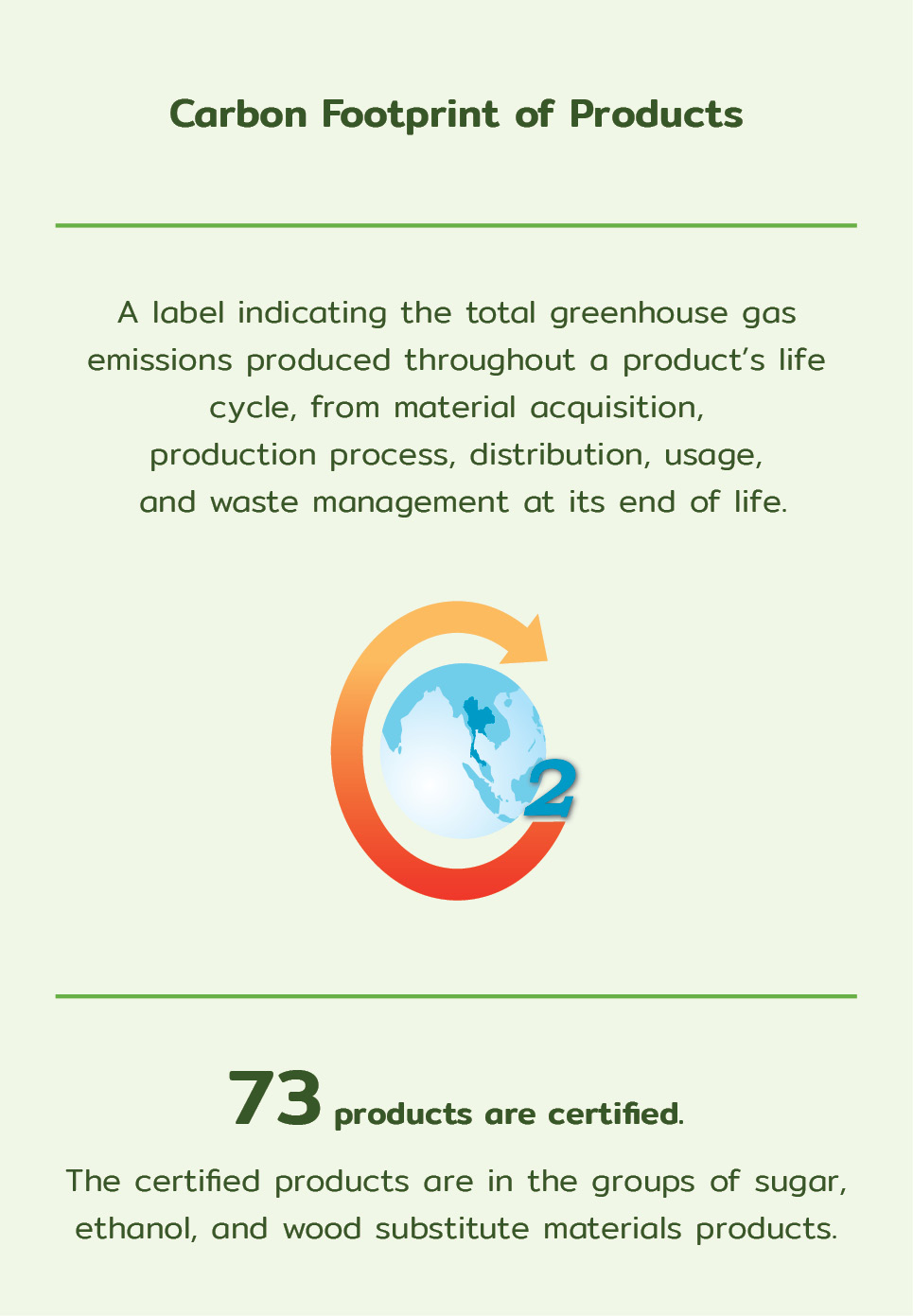
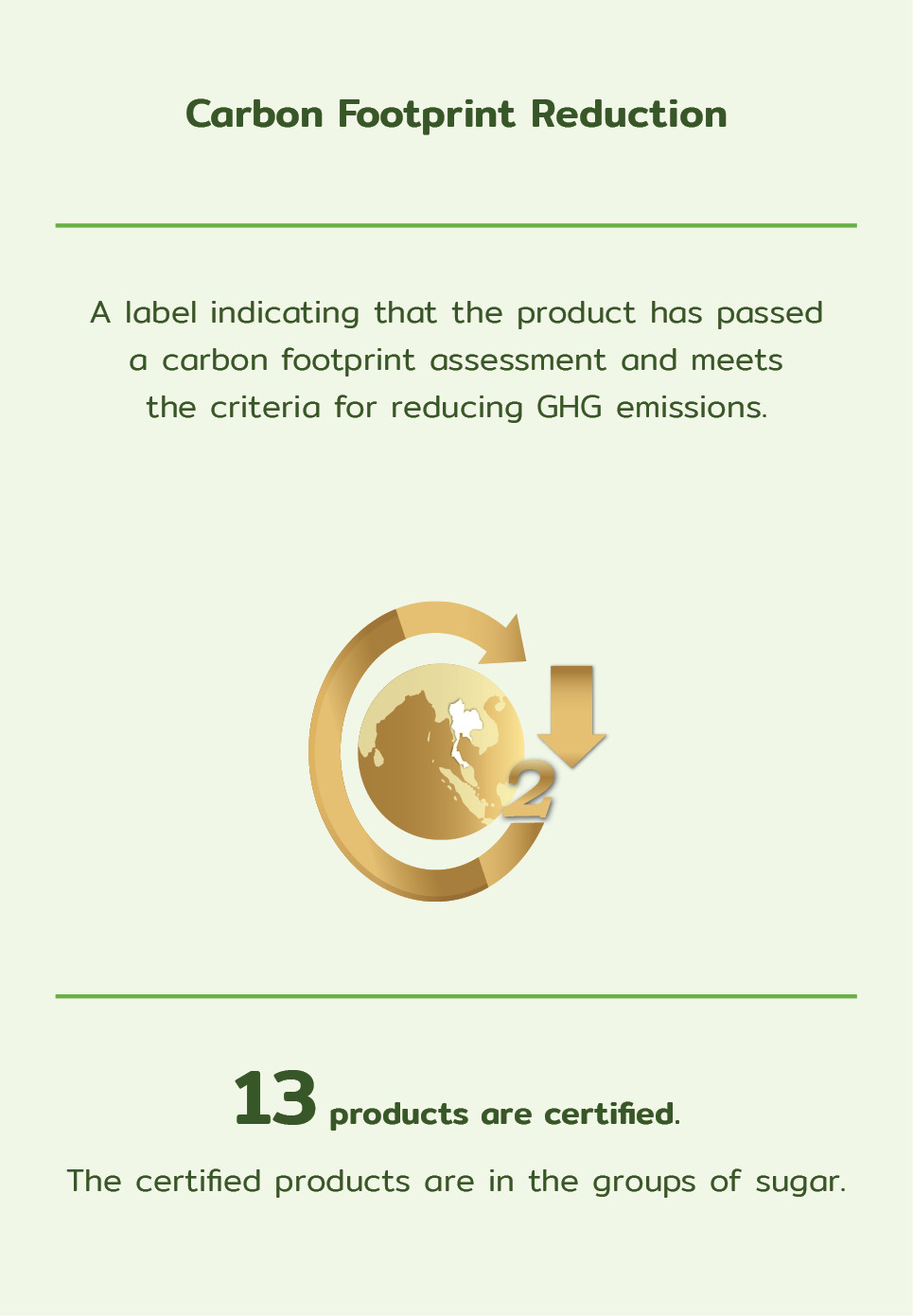
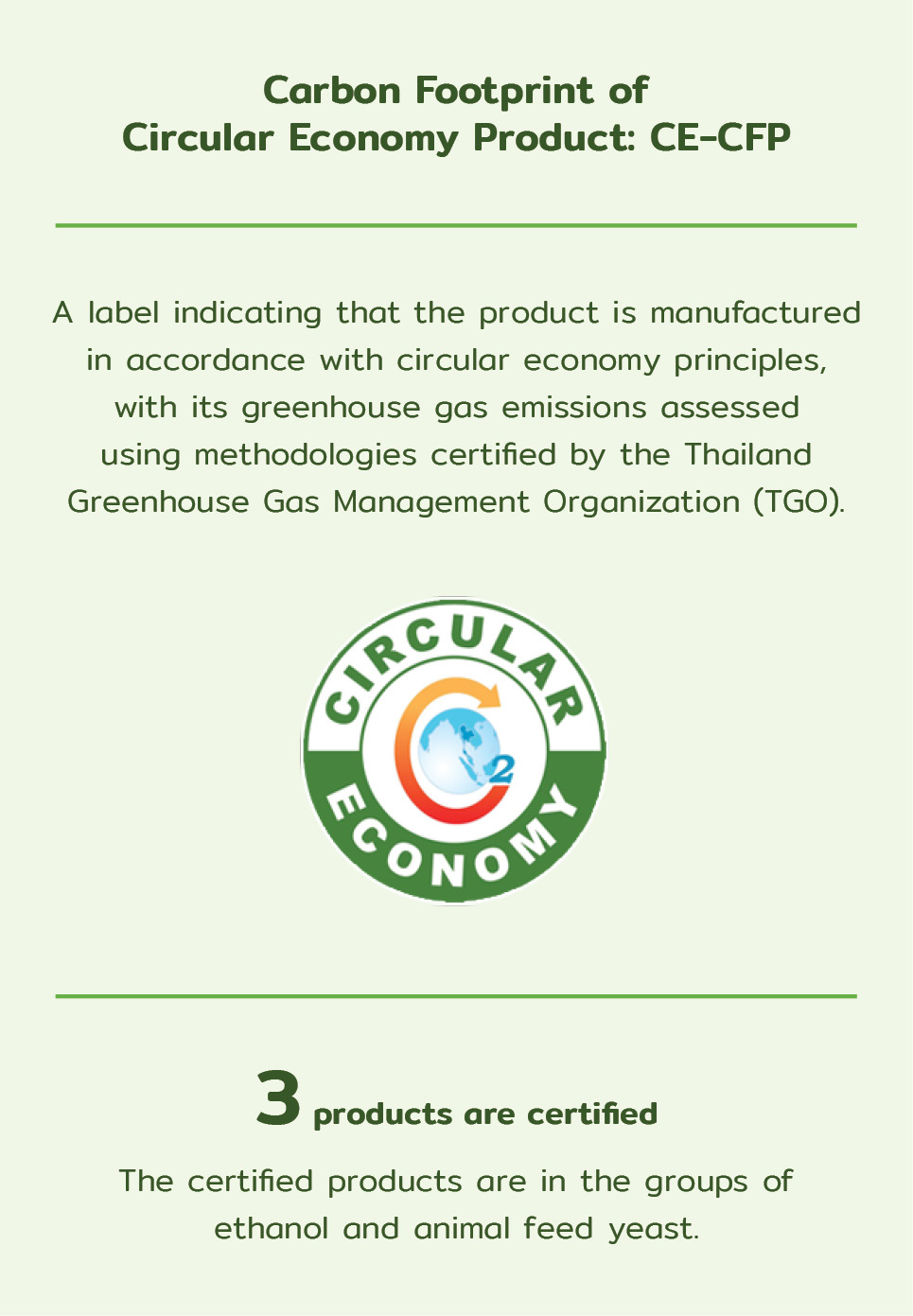
Driven by its commitment to reducing greenhouse gas (GHG) emissions, together with evolving market trends and increasing demand for low-carbon products, Mitr Phol continues to develop lower-carbon products and obtain greenhouse gas-related certifications from the Thailand Greenhouse Gas Management Organization (TGO). The Company’s certified products are presented below.

Thailand Voluntary Emission Reduction Program: T-VER

Mitr Phol Group has successfully registered and obtained certification for 10 T-VER projects
in the Renewable energy and fossil fuel replacement categories, resulting in approximately 1,00,000 tCO2e/year.

Renewable Energy Certificates (RECs)

Total RECs: 1,000,000 RECs/year

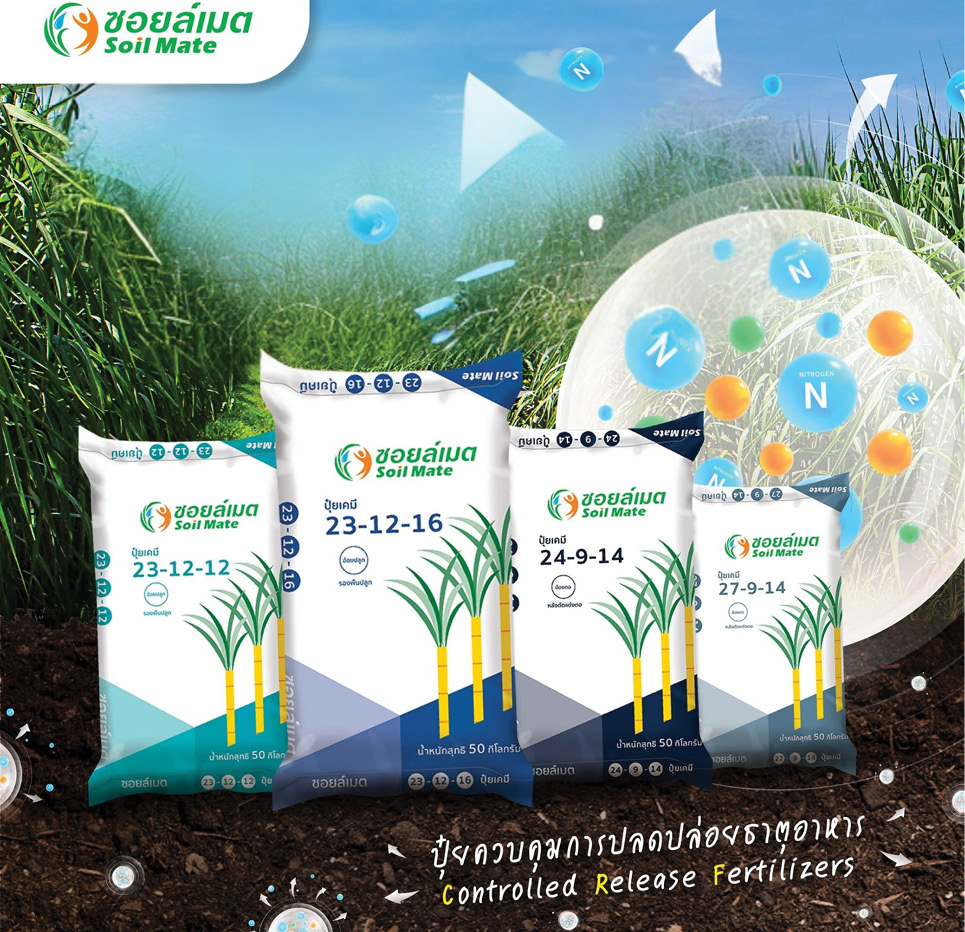
Controlled Release Fertilizers

The Mitr Phol Innovation and Research Center has developed Controlled Release Fertilizer (CRF), an innovative fertilizer designed to gradually release nitrogen over an extended period, ensuring that sugarcane receives sufficient nutrients throughout the growing cycle. A 50-kilogram application of CRF delivers equivalent effectiveness to 100 kilograms of conventional fertilizer, enabling more efficient resource utilization while reducing fertilizer use and associated environmental impacts.
Bioplastic Products

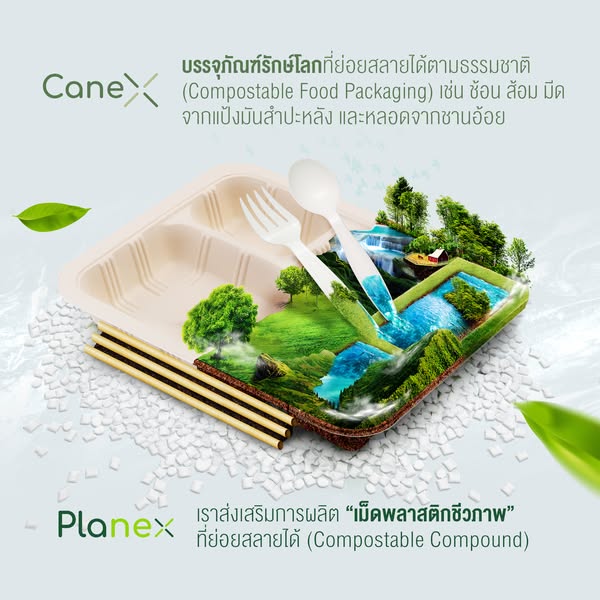
Mitr Phol’s Bio-Materials Business has developed compostable bioplastic compounds under the PlaneX and CaneX brands. Produced from bio-based feedstocks derived from agricultural crops, such as cassava and sugarcane, these products provide an environmentally friendly alternative to conventional fossil-based plastics. The products support the growing demand from both consumers and businesses seeking more sustainable solutions, while contributing to the transition towards a circular economy.
Low-Carbon Logistics Development

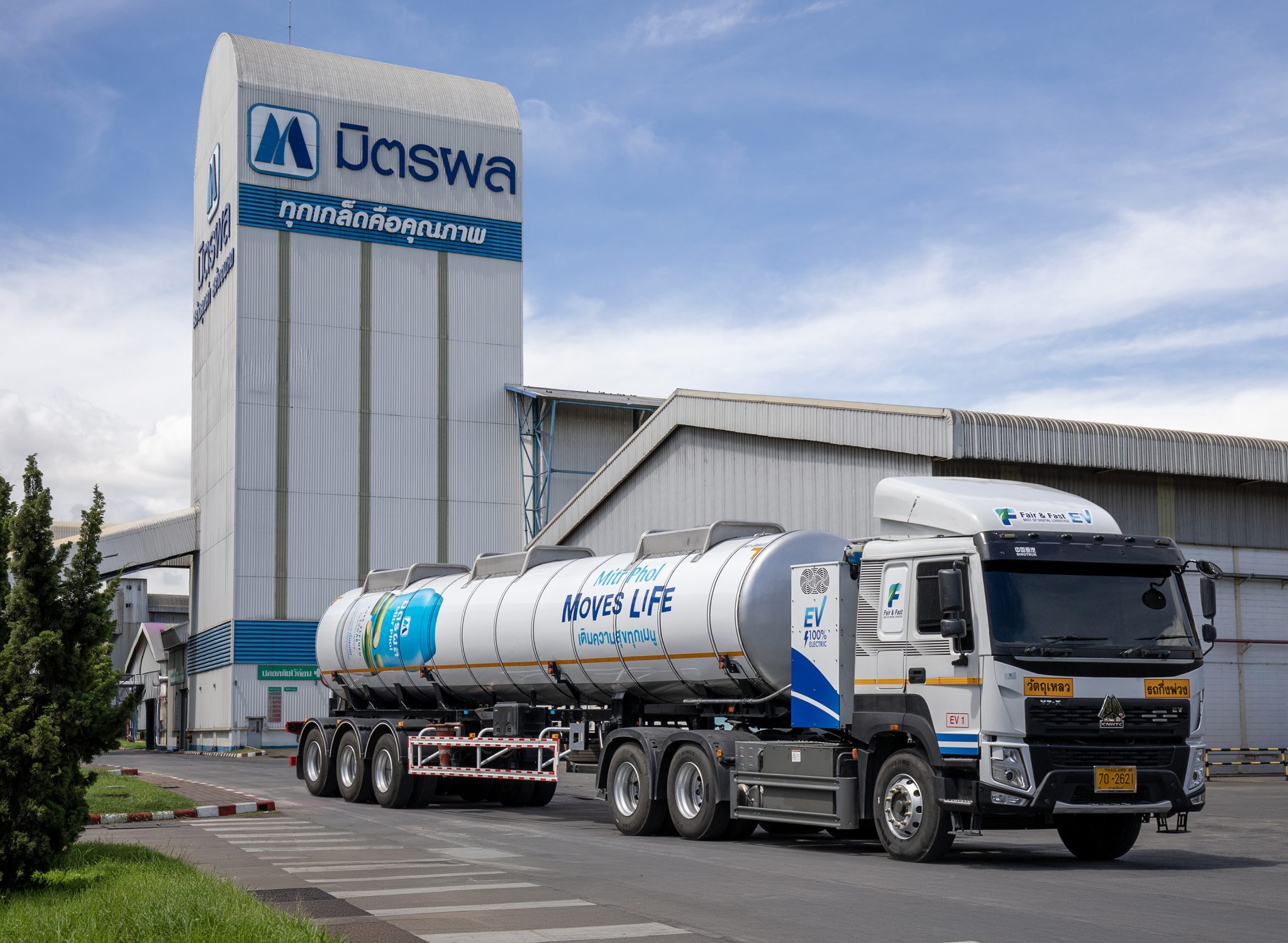
Fair and Fast Co., Ltd., a subsidiary of Mitr Phol Group, provides integrated Digital Logistics & Supply Chain Solutions to enhance transportation efficiency and support the transition to a low-carbon supply chain.

In 2025, the Company transported more than 21,700 tonnes of raw sugar by rail, reducing greenhouse gas emissions by approximately 650 tCO₂e compared with conventional road transportation. In addition, electric trucks were deployed for syrup deliveries, covering more than 80,000 kilometers and reducing greenhouse gas emissions by over 80 tCO₂e compared with conventional diesel trucks.

The Company plans to further expand rail transportation and the use of electric trucks to improve logistics efficiency, reduce environmental impacts, and support greenhouse gas emissions reductions across the supply chain.

Research for Greenhouse Gas Emissions Reduction

To support its climate targets, the Company continuously conducts research and development to identify opportunities for reducing greenhouse gas (GHG) emissions and improving resource efficiency. Key research and development initiatives undertaken in 2025 are highlighted below.

  • Research and Development of Low-Carbon Fertilizers and Fertilizer Use Efficiency
    This research focuses on reducing GHG emissions while maintaining soil enhancement performance and supporting crop growth. The Company also evaluates conventional fertilizer application against soil analysis-based fertilization to ensure crops receive nutrients in amounts that align with actual agronomic requirements, thereby improving fertilizer use efficiency.
  • Application of Thermal Infrared (IR) Camera Technology for Fire Prevention
    Large bagasse stockpiles may be susceptible to spontaneous combustion, resulting in material losses and unnecessary GHG emissions. To address this risk, Mitr Phol combines thermal infrared (IR) camera technology with drone-based monitoring to regularly assess bagasse temperatures. This enables early identification of temperature abnormalities and supports more effective risk prevention and management.

Related Document

TCFD - IFRS S2 Report