Key Stakeholders: Shareholders, Farmers, Community, Customer and Consumers, Government and Civil Society Sectors
Ecosystem services supported by rich biodiversity across the value chain are essential to Mitr Phol’s business operations, from sugarcane sourcing and production processes to the delivery of products to customers and consumers. Therefore, preserving, restoring, and promoting balanced biodiversity, including soil fertility, water system integrity, and environmental stability, are key factors contributing to consistent and efficient production.
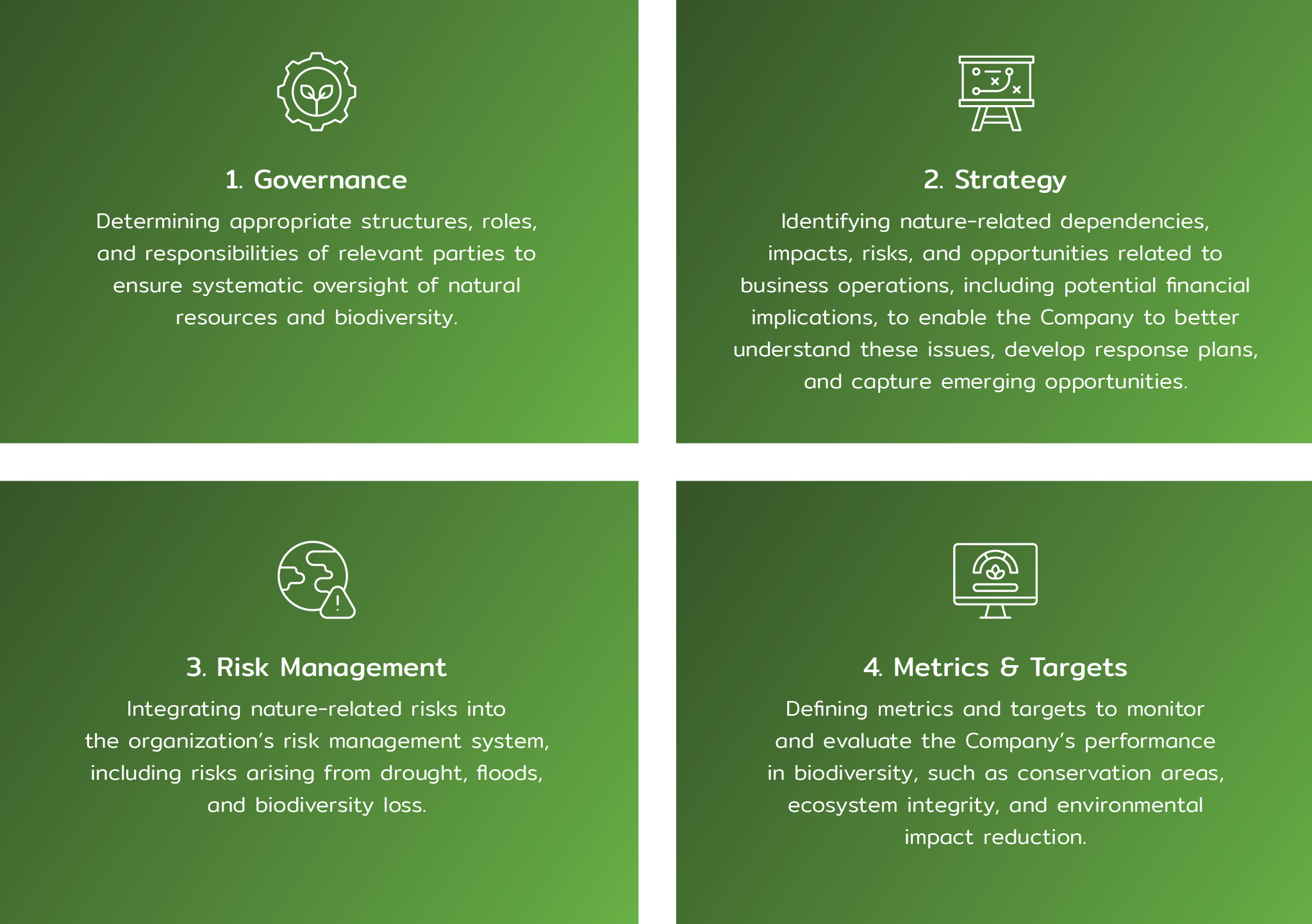
To build a resilient production system that both the Company and farmers can rely on in the long term, serving as both a risk buffer and a driver of sustainable growth, Mitr Phol conducts biodiversity assessments in alignment with the Taskforce on Nature-related Financial Disclosures (TNFD) framework to better understand and manage nature-related risks and opportunities. The Company also discloses relevant information to ensure transparency, while implementing measures to prevent, restore, and remediate impacts, as well as promoting community awareness and engagement in biodiversity conservation and sustainable use.
|
|
Target
|
Performance
|
|---|---|---|
|
No net loss (NNL) of biodiversity within the Company’s operational scope
|
Achieve No Net Loss (NNL) of biodiversity within the Company’s operational scope by 2030
|
Achieved no net loss (NNL) of biodiversity within the Company’s operational scope.
|
|
Ratio of green space inside the factory area
|
Not less than 5% of the factory area
|
14.34% of the factory area
|
|
Tree planting
|
Plant 1 million trees within 10 years
(2022 - 2032) |
In 2025, the Company planted
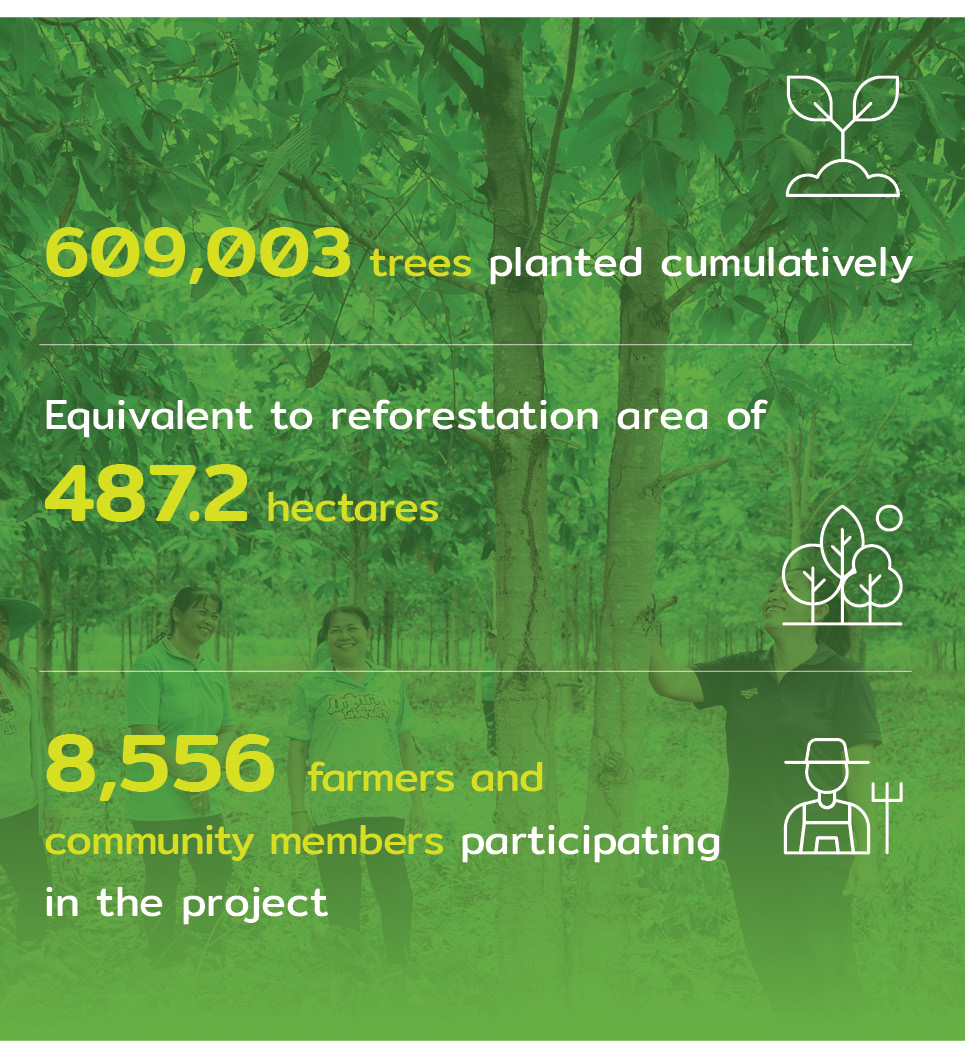
91,062 trees. Cumulative total of 609,003 trees. |
Mitr Phol reports its biodiversity management in alignment with the Taskforce on Nature-related Financial Disclosures (TNFD) framework, including the assessment and disclosure of relevant information as outlined below.
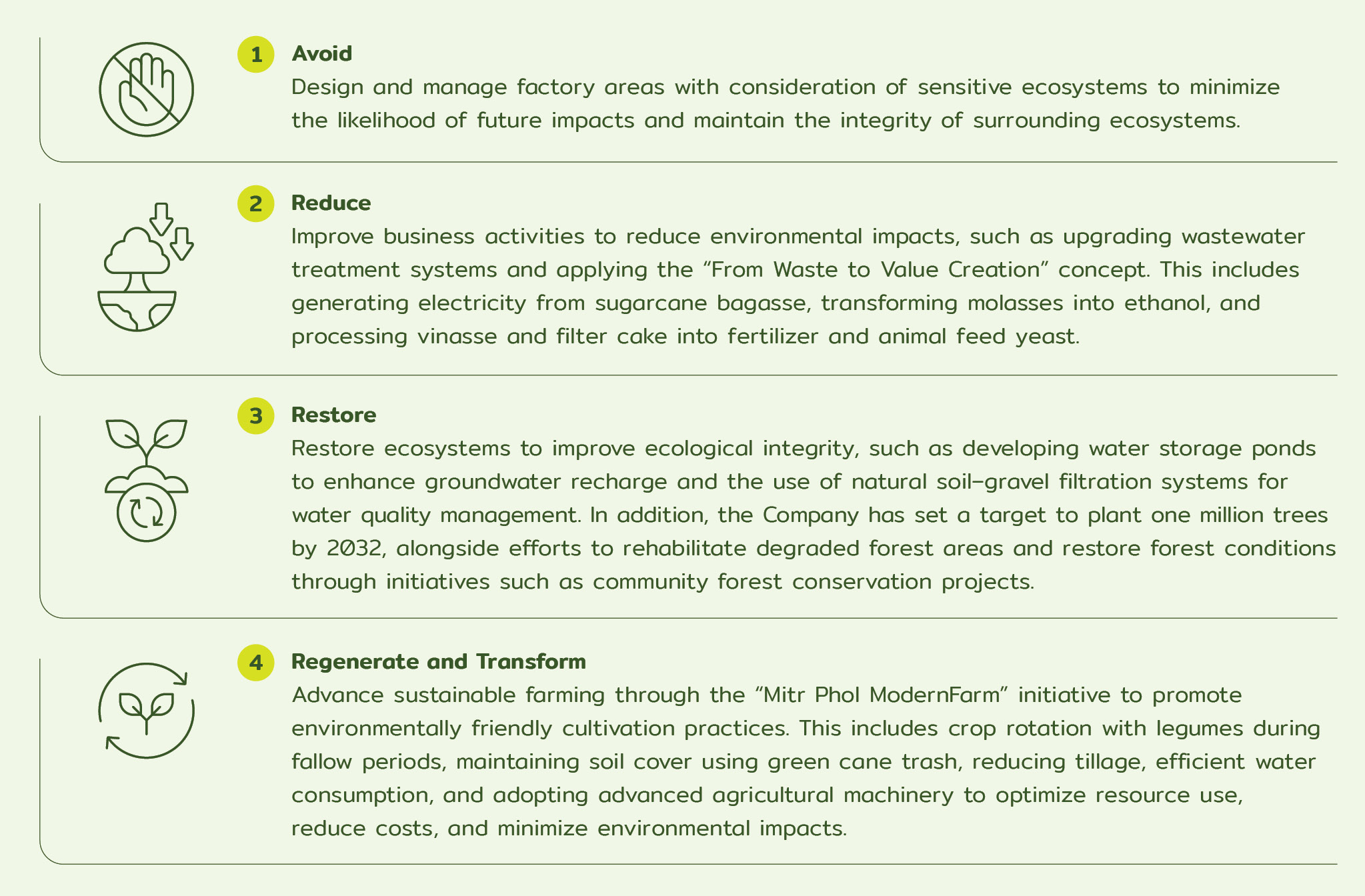
Mitr Phol has applied the AR3T Action Framework of the Science-Based Targets for Nature (SBTN) network, in alignment with TNFD recommendations. The framework includes:
One Million Tree Planting Project
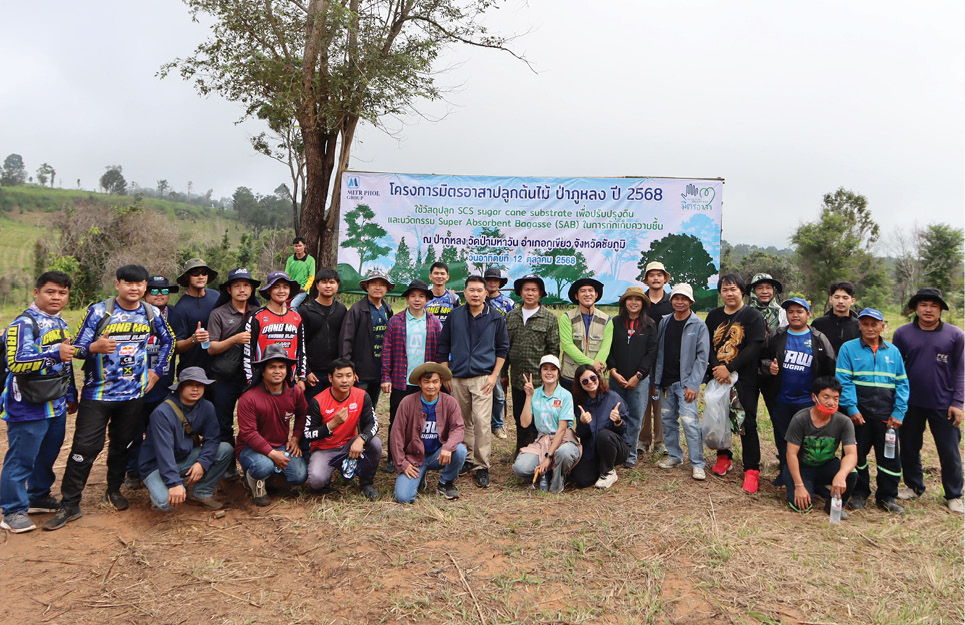
Mitr Phol implements a tree planting initiative to conserve and restore natural ecosystems, enhance carbon sequestration, and expand green spaces. The initiative aims to plant one million trees over a 10-year period (2022–2032) across the Company's operational areas and in collaboration with farmers and local communities.
Community Forest Project in Collaboration with the Mae Fah Luang Foundation
Mitr Phol, in collaboration with the Mae Fah Luang Foundation, is implementing a community forest restoration project in Amnat Charoen Province, covering 1,000 rai over a three-year period starting in 2023, with a total budget of THB 2.7 million. The project aims to restore degraded forest areas, enhance ecosystem health, and strengthen carbon sequestration capacity, with an estimated carbon sequestration potential of approximately 5.625 tCO₂e per hectare per year.
The project also generates income and promotes community participation through forest conservation and maintenance activities, the establishment of a community fund, capacity-building programs on forest conservation and wildfire prevention, and the development of sustainable forest utilization guidelines. Project implementation is continuously monitored and evaluated in accordance with the forest-sector greenhouse gas mitigation guidelines of the Thailand Greenhouse Gas Management Organization (Public Organization), ensuring long-term environmental and community benefits.